
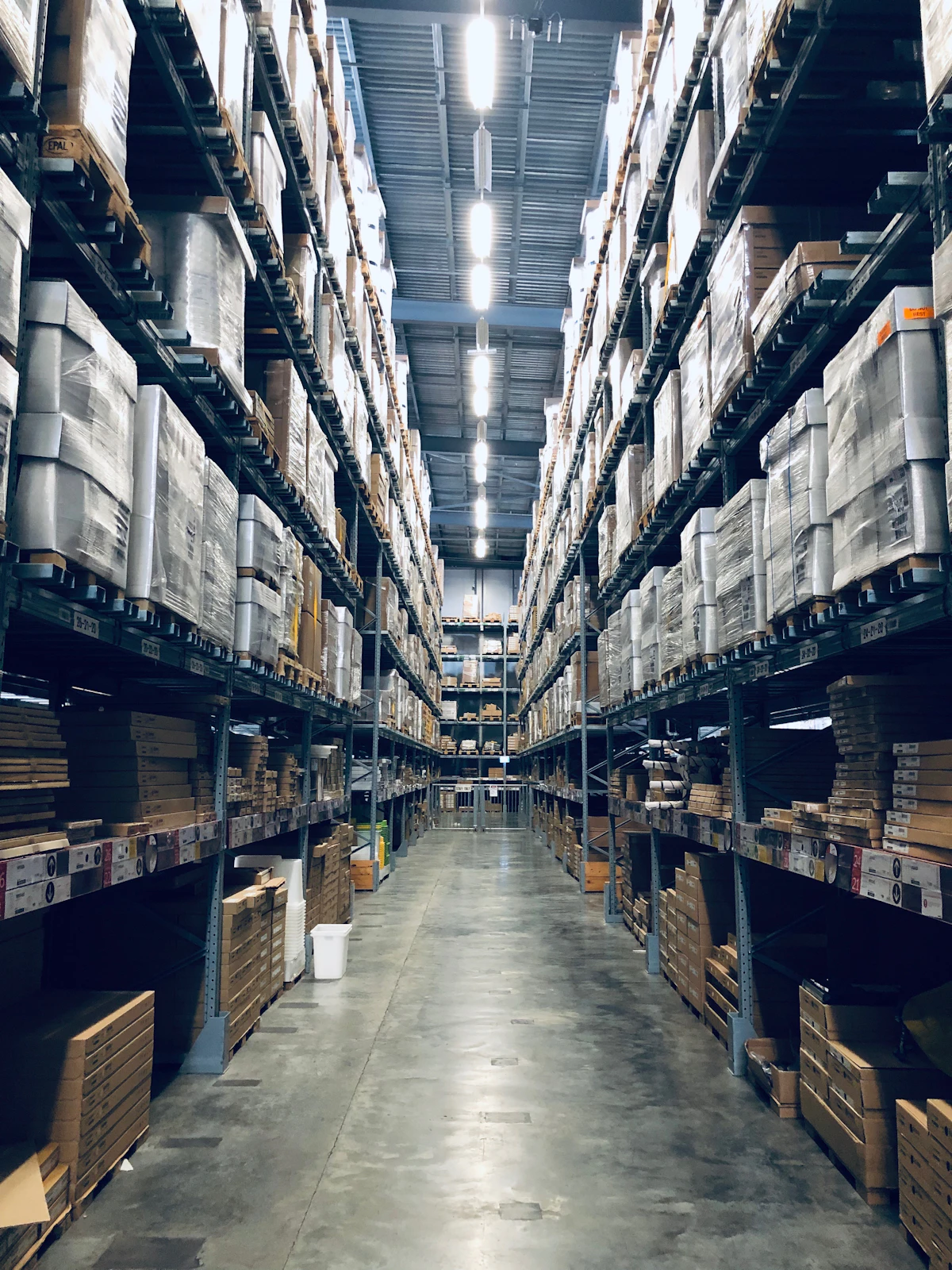
Why Warehouse Security Is a Scale Problem
A single 200,000 square foot distribution building can have twenty dock doors, forty rack aisles, a fenced trailer yard and a hundred people moving through it across three shifts. No supervisor can see more than a fraction of that at any moment, and that is the real security problem in a warehouse. It is rarely a smash-and-grab. It is a case pulled off a pallet during putaway, a return that never made it back to stock, a trailer that left the yard with three extra pallets, or a driver who backed into a dock plate and said nothing.
Because inventory discrepancies usually surface at cycle count, often weeks after the fact, the only way to resolve them is to go back to recorded video of a specific dock door or aisle at a specific timestamp. That is why we tell Fort Worth operators to think of cameras as the operational record of the building first and a theft deterrent second. The same footage that catches a bad actor also settles carrier disputes, verifies pick accuracy and documents safety incidents.
This guide walks through how we design camera systems for warehouses, 3PLs and distribution centers across Tarrant County, so you can judge any proposal you receive, ours included. If you want the service overview first, see our Warehouse Security Cameras page.
Dock Doors: Where the Money Is Won and Lost
If you can only afford cameras in one place, put them on the dock doors. Freight claims are constant in logistics, and a clip showing a shipment loaded intact, sealed and counted at a specific time routinely defeats a damage or shortage claim that would otherwise be absorbed as a loss. Bill-of-lading disputes with carriers work the same way.
Each dock door should get a dedicated camera, not a shared one pointed down the row. The ideal angle sees both the trailer interior and the dock plate, so you can show what went in, what came out, and who was standing there. Cameras that cover three or four doors at once end up too far away to read a pallet label or a seal number, which defeats the purpose.
A second camera covering the staging area just inside the doors captures the handoff between the dock and the floor. Add one at the shipping and receiving office window, where paperwork and seal numbers change hands, and you have a complete chain of custody from the trailer to the rack. Pair that with a simple habit, such as exporting dock video within 24 hours of any claim notice, and your claim exposure drops noticeably.
Cameras at the dock need good wide dynamic range, because an open overhead door puts bright Texas daylight and a dark trailer interior in the same frame. A camera without proper WDR will either blow out the outside or turn the trailer into a black rectangle. We specify and test this on site rather than trusting the spec sheet.
High-Bay Aisles and Corridor-Mode Cameras
Ceilings in modern Fort Worth warehouses commonly run twenty-four to forty feet to the deck, and a standard wide-angle camera pointed down a rack aisle wastes most of its pixels on racking and ceiling. The better tool is corridor mode, where the camera sensor is rotated ninety degrees so the picture is tall and narrow, matching the shape of the aisle. One corridor-mode camera can cover an entire aisle from the rafters to the floor with far better detail than a conventional camera at the same price.
Mounting is heavy work. It means scissor lifts or boom lifts, coordination around active forklift traffic, and often second-shift or weekend scheduling when aisles can be cleared. Cable is carried in rigid EMT conduit or cable tray along bar joists and rack uprights, because exposed cable in a warehouse will eventually be caught by a lift mast or a pallet.
Where you put aisle cameras depends on what you are trying to learn. For loss, cover the high-value zones such as electronics, tools, spirits or pharmaceuticals, plus the cross-aisles where product moves between zones. For safety, cover the blind corners and intersections where forklifts and pedestrians meet. Video from those spots helps with OSHA-recordable investigations and lets safety managers spot near-miss patterns before someone is hurt, and it supports powered industrial truck training documentation.
Not every aisle needs coverage on day one. A phased plan that starts with docks, high-value zones and entrances, then expands as budget allows, is usually smarter than a thin system spread evenly across the building.
Fiber, PoE Switches and Long Cable Runs
Standard Cat6 tops out around 100 meters, and warehouse runs routinely exceed that. The far end of a big-box building, a guard shack, or a camera across a trailer yard will not work on a plain copper run. The usual fixes are a fiber optic backbone to remote PoE switch nodes, or licensed point-to-point wireless bridges where trenching is impractical.
A good layout places a small number of PoE switches in ventilated enclosures at strategic points, connects them back to the main equipment room with fiber, and powers cameras from the nearest node over short copper runs. That keeps cable cost down, improves reliability and makes future additions easier. Our PoE Security Cameras page explains how this power and data approach works in more detail.
The recorder belongs in a conditioned IT room, not on the warehouse floor. Dust and heat kill hard drives, and a RAID server NVR is only as dependable as the room around it. For a building with dozens of 4K cameras, plan on storing 30 to 90 days of continuous video locally. With on-premise storage there are no monthly cloud fees, and you control who can access the footage.
Heat deserves its own mention. Unconditioned warehouse interiors in North Texas regularly exceed 110 degrees in summer, so cameras and any remote switch enclosures need wide operating temperature ratings and proper ventilation. Equipment that is fine in an office will fail early in a metal building in August.
Trailer Yards, Gates and LPR
Overnight trailer theft and loaded-trailer disputes happen in the yard, not in the building. A fenced trailer yard needs perimeter coverage that works in the dark, which usually means pole-mounted cameras with strong color night vision or thermal optics where false alarms from blowing debris and animals are a concern. Poles are set with direct-burial conduit, and exterior hardware should be specified for hail, which is a real North Texas risk.
The gate throat is the best single spot for plate and trailer number capture. A dedicated license plate recognition camera records tractor plates and trailer numbers for every entry and exit, so you can later answer which truck came in, which trailer left and when. We cover the physics of reading plates in our License Plate Recognition Cameras page and in our recent LPR buyer's guide. One lane, one LPR camera and a way to slow vehicles down is the formula that works.
Larger facilities, such as high-volume fulfillment sites, add conveyor and sortation monitoring and tighter access control. If that sounds like your site, review our Distribution Center Security Cameras page. Carrier terminals and cross-docks have their own chain-of-custody needs, covered on our Freight and Cross-Dock Terminal page.
Fort Worth Logistics Corridors and Next Steps
Fort Worth is one of the largest inland logistics markets in the country, and local building stock varies a lot. The AllianceTexas corridor along I-35W north, through Haslet and Northlake, is mostly new tilt-wall construction with thirty-six-foot clear heights, large trailer yards and heavy truck traffic day and night. Those buildings push designs toward fiber backbones, yard poles and gate LPR.
East of Fort Worth, the Great Southwest Industrial District in Arlington and Grand Prairie mixes older masonry buildings with modern facilities, tighter sites and shared truck courts, so perimeter fence coverage carries more weight. South Fort Worth and Everman along I-20 and I-35W, plus the Saginaw and Blue Mound corridor, add mid-size distribution and manufacturing space with their own quirks.
A good first step is a walkthrough. We look at dock doors, ceiling heights, power and network pathways, yard layout and the incidents you have actually had, then propose a phased plan with clear camera placement and storage sizing. Our Commercial Security Camera Installation page covers the broader process, and you can request a free security camera quote to schedule a site visit.
Need Professional Installation or a Custom System Estimate?
Call our local technicians at 817-231-2962 for transparent pricing and itemized quotes.
Frequently Asked Questions
Local DFW Service Area & City Pages Directory
Fort Worth Security Cameras provides hardwired 4K CCTV installation, commercial surveillance, and structured cabling across Tarrant, Dallas, Denton, Johnson, Collin, and Ellis counties. Select your local city page below to review city-specific project examples, neighborhood case studies, and transparent local pricing: